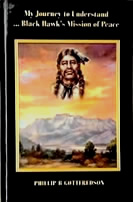
The writer is the author of Black Hawk's Mission of Peace Phillip B Gottfredson
Battle Creek Massacre
The date was February 28, 1849, a year before the Fort Utah Massacre, A company of forty-four Mormon militia, under the leadership of Captain John Scott, left Salt Lake in pursuit of a so-called "renegade band of Indians" who, allegedly, had taken horses blonging to Brigham Young. Brigham ordered Captain Scott and his men to find and punish the thieves. But before the troops reached the valley where members of the Timpanogos Tribe were camped, Captain Scott had received word from Brigham "three times," that the horses had only been moved to a new pasture to graze and return to Salt Lake. Captain Scott alegedly ignored Brigham's order.
Scott and his men met up on the Provo River with a Timpanogos man by the name of Little Chief, whose son led Scott to an encampment of Indians who also allegedly had been doing some stealing. The trail took the company of soldiers to the mouth of a canyon above Pleasant Grove.
The author, Phillip B Gottfredson, consulted the Timpanogos Tribe to get their perspective on this event. "It seems unlikely that Little Chief or his son, back on the Provo River, would lead Scott to his own people unless they were being threatened."
Note: Scott and his men found thirteen cow hides near the camp, which the attackers deemed proof these were the Indians who had taken their cattle.
The Timpanogos commented, "Why would we want to eat beef. We preferred elk, deer, and buffalo."
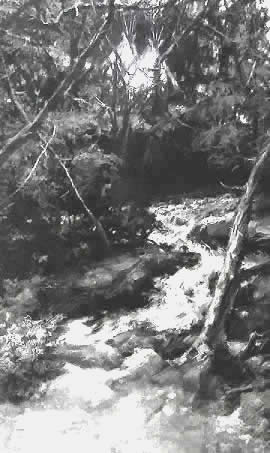
The story begins in the twilight of a cold February morning in 1849, smoke from the lingering fires inside the teepees curled softly into the frosty air. All was silent as people of the Timpanogos Tribe lay asleep, warm in the comfort of their teepees. Only the occasional breeze sent ice crystals from the trees into the air, drifting lightly upon the snow-covered ground below. The only sound was that of the nearby stream softly winding its way along.
Emerging from one of the teepees, a woman carrying some sticks in her arms to start the morning cook fire paused a moment.
Looking about, she had an eerie feeling that something was not right. The silence became quieter as the sound of the stream grew louder. The dogs in the camp became agitated and awakened those still sleeping. Two Timpanogos warriors, known to the Mormons as Kone and Blue Shirt, stepped out from the teepee. Kone saw they had been surrounded by armed Mormon militia.
Scott and forty-four of his men had split into four groups when they opened fire on the unsuspecting people sleeping there, an argument ensued, and another shot was fired, hitting Kone in the back of his neck, the bullet blowing off the top of his head. Another man fell while the besieged, armed only with one gun, a hunting bow, and some arrows, dove into the ravine to take cover in the thick brush.
Seventeen men, women, and children ran screaming. Blood spattered across the snow. People running into the ravine in shock as bullets whizzed at them from every direction. The shattered air was filled with smoke from the guns as two Timpanogos lay dead.
For a moment, there was silence. Then Captain John Scott gave the order to 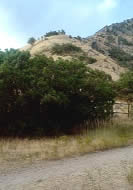 his men to throw rocks into the ravine. The voices of those being hit cried out in pain. More gunfire echoed off the steep cliffs above. When a nearby band led by Opecarry heard the guns, they took position on the top of a hill directly above the scene. Opecarry could see his brothers trapped in the ravine, and he began signaling to them where the best route to take to safety was. Blue Shirt, unarmed, made a break from the cover of the ravine on the east end and began to climb the hill where Opecarry stood, but he was peppered with bullets hitting him sixteen times, killing him.
It is said that the massacre continued for a couple of hours, but questionable. Those trapped in the ravine, standing in freezing water, had only the one old hunting rifle. A brave girl about the age of sixteen emerged from cover and pleaded with Captain John Scott to not harm her brother. Scott ordered her to bring her brother to him. She brought her brother from the thicket. He stood dignified in front of Scott and said, "Go away, what are you here for? Go away ... you kill my father, my brother ... for what? Go away, let us alone. What are you here for?"
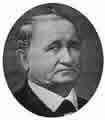 According witnesses, Dimick Huntington grabbed the boy by his ear and, putting a gun to his face, shouted, "We are here to open your ears, so you will hear. We said to you a long time ago, don't kill our cattle. You kill them all the time now ... you will hear good. How many guns Indian got down there, pointing to the ravine?
The boy answered, "One." Dimmick told the boy to go back and get it. The young man answered, "You go get it if you want it." Again Dimmick grabbed the boy by the ear and raised his gun to his head and shouted, "You have no good ears to hear. Get me that gun, or I will open your ears and you will hear!"
The young boy got the rifle, and when he returned he threw it on the ground breaking the stock.
 "Joshua Terry, a pioneer of 1847, and a mountain man who married into an Indian tribe, once told the writer ( Howard R. Driggs) that this Indian boy became the warring leader Black Hawk. When peace came, after the Black Hawk War of the late 1860s, this Chief, Terry declared, told him that he was this same boy taken after the fight on Battle Creek Canyon. He could never understand why the white men had shot down his people. It put bitterness in his heart; and though he lived for some time with the white people, his mind was ever set on avenging the wrong. That is why he later made war against them." (Story of Old Battle Creek Canyon and Pleasant Grove, Utah, Howard R. Driggs, 1949)
Nine women, a few children, and the young boy, numbering 15 in all were then marched down the canyon at gun-point leaving behind their loved ones lying dead in the snow. The terrorized captives, who survived the attack, were taken thirty miles north to Salt Lake City. The young boy would later become known as Black Hawk. It is said, "he put up a good fight, but shook with fear when taken captive."
"When the firing had ceased it was perhaps 8 o'clock, the sun was high up, and Little Chief had come from his home (on the Provo) on horseback, since he first heard our guns. The morning was clear and calm as God ever made, and the volleys of our guns rolled down the mountain (to) Little Chief's ears ... (so) he mounted his best horse and dashed up the mountainsides for ten miles ... His horse, a noble animal with large extended nostrils, was as wet as the poor squaws who had laid in the creek. Little Chief was wet with tears and his horse wet with sweat. The old man howled, cried, moaned, screamed, and smote his breast in the greatest agony of mind when he came to us. He blamed himself and cursed the whites, and said it would not be good medicine for two or three to come up there alone as they had done before." [Source: Hosea Stout Journal] See Chief Little Soldier Attack ON A Platoon Of Soldiers At Pleasant Grove
Historical records give little information on why Black Hawk, along with the women and their children, were taken captive at Battle Creek Canyon and to Salt Lake. Incredibly, the children were taken from their mothers and placed in the care of Mormon families. Why would they have not been returned to their people instead? The Timpanogos Nation explained, “Brigham often took our children and held them captive knowing that we would not attack fearing our children would be hurt. Also, Black Hawk was the nephew of Chief Wakara.”
The survivors were not allowed to mourn the death of their families or attend to their burial, were simply left behind for the animals to feed upon as was so often the case.
Hosea Stout gave a partial list of the soldiers who took part in the massacre: Colonel John Scott, Commander Alexander Williams, Aide Sorenus Taylor, Frank Woodard, George Boyd, Hosea Stout, David Fulmer , John Brown, Oliver B. Huntington, William G. Pettey, John S. Fullmer, John Lowry, Dick Stoddard, Judson Stoddard, Shell Stoddard, Irwin Stoddard, Dimick B. Huntington (Interpreter), and Barney Ward (Interpreter).
A year after the Battle Creek Canyon Massacre, the Higbee brothers and Dimmick Huntington were made presidency of the soon-to-be Provo Branch of the LDS Church and led a party of thirty saints to the Provo River to erect a fort. Apostle George A. Smith commanded "remove the Indian people from their land," he said. Indian people have "no rights to their land." The unanswered question is, who gave George that authority?
March, 1849, when they were a few miles north of the Provo River, Dimmick and his party were stopped by An-kar-tewets, a warrior of the Timpanogos, who stood before the men telling them to go back where they came from, that they were not going to make any settlement on their land. Allegedly they argued for some time until Dimmick pleaded with An-kar-tewets that they wanted to live in peace with the Timpanogos, and he made promises of gifts. According to the victors' accounts, following a lengthy discussion, An-kar-tewets made Dimmick raise his hand to swear to the sun that no harm would come to the Timpanogos, that they would never take away their lands or rights.
The Timpanogos Nation dispute this account saying "it would be implausible that a warrior such as An-kar-tewets would have made any concession to accommodate Dimmick and his party because of what had happened earlier at Battle Creek Canyon. First of all, he would not have the authority to speak on behalf of the Timpanogos community nor make a decision that potentially put the entire tribe and its most precious resources at risk. And we do not swear to the sun. It would be more in the character of An-kar-tewets to have firmly told Dimmick and his party to go away. The Mormons bullied their way into our territory."
Dimmick and the rest of the party immediately began building the fort, for they knew they were in danger. Little did Dimmick and the others know that the land they were erecting the fort on was a traditional and sacred meeting place for the Timpanogos and other bands of the Shoshone, who came from hundreds of miles around during the spring and summer months to celebrate. There were twenty-seven bands of shoshonee who would gather in sacred ceremonies to honor the Creator. If Dimmick knew it was sacred land, they didn't care, they had no intention honoring their sworn oath made earlier.
The Murder Of Old Bishop
On August 1, 1849, three men rode along the Provo River on their horses when they came upon a "friendly Indian" whom the whites called Old Bishop. The whites called him by this name because his mannerisms reminded them of a white man named Bishop Whitney. The three men, Rufus Stoddard, Richard Ivie, and Gerome Zabrisky, began to bully the man. They accused him of stealing the shirt he was wearing off a clothesline. Old Bishop denied having stolen the shirt from anyone, saying he had made a fair trade for it.
Ivie pulled his gun on Old Bishop and told him to take it off. The old Indian man stood his ground and refused. Ivie murdered the Indian in cold blood.
Concerned that what they had done would spark retribution from the Timpanogos, the men then eviscerated the old man, filled his body cavity with rocks, and threw him in the Provo River. Quoting from History of Utah State, by James Goff, one of the colonists, "The men who killed the Indian ripped his bowels open and filled them with stones preparatory to sinking the body." Then making a mockery of the murder, he writes, "The Indians assert that, annually, on the anniversary of his death the Old Bishop appears on the bank of the river and slowly takes the rocks one by one out of his bowels and throws them into the river, then disappears. Some (white) fishermen have watched in hopes of having an interview with the Bishop's ghost. "
Satisfied, the men returned to the fort and boasted of taking Old Bishop's life. So much for the promises—empty words— made by Dimmick Huntington and the Higbee brothers to An-kar-tewets. Thinking they had committed the perfect murder, they relaxed and fell back into their routines.
The Timpanogos band camped near Fort Utah demanded that the people of the fort turn over the one guilty of killing Old Bishop, but their orders fell on deaf ears. The Timpanogos demanded cattle and horses as compensation for the death of Old Bishop and again were ignored.
Confrontations began to esculate between the settlers at Fort Utah and the Timpanogos. A government officer named Captain Howard Stansbury convinced Brigham that all conciliatory efforts had failed, and the only recourse was to take action against the Timpanogos. In contradiction to his "feed them not fight them" policy, Brigham wholeheartedly agreed with Stansbury and supplied his vigilante army with arms, ammunition, tents, and camp equipage for the soldiers.
Brigham Young is quoted saying, “I say go [and] kill them…Tell Dimick Huntington to go and kill them—also Barney Ward—let the women and children live if they behave themselves…We have no peace until the men [are] killed off—never treat the Indian as your equal.” Source BYC, Microfilm reel 80, box 47, folder 6. Farmer, Jared (2008). On Zion’s Mount: Mormons, Indians, and the American Landscape. Harvard University Press. ISBN 9780674027671
Daniel H. Wells, member First Presedency of the LDS Church, issued Special Order No. 1 a war-order to the Nauvo Legion allerting them to prepare to exterminate the Timpanogos Nation, Jaunuary 31, 1850. Source: Original documents Utah State Capital Achieves.
Extermination Order No. 1 Jan. 31, 1850

“On July 31, 1850, Apostle Daniel H. Wells drafted orders for Captain George D. Grant to exterminate the Timpanogos, known as Special Order No. 2. The decision was the result of a meeting with Isaac Higbee, bishop of Fort Utah, together with the First Presidency and the Quorum of the Twelve Apostles. Higbee reported conflict between the pioneers and the Timpanogos, and it was unanimously decided the only way to keep Fort Utah would be to exterminate the Timpanogos."
Extermination Order No.2 Jan. 31, 1850 - Fifty Timpanogos Beheaded

The Fort Utah
Massacre Provo, Utah 1850
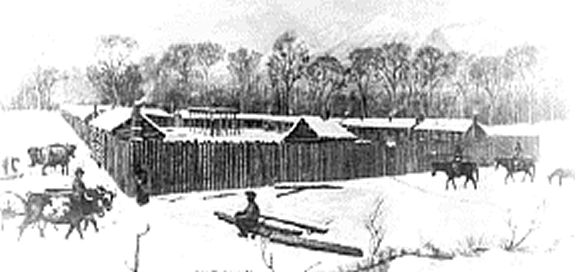
Now that Fort Utah had been established on land essential to the Timpanogos that provided ample food for them and their horses. About 120 settlers lived in and around the fort. Of course, they brought their horses and cattle with them, and in a short time, the Timpanogos were competing with the Mormon saints for food for man and horse alike.
First, the occupants at the fort attempted to make the fort into a trading post. Trading buffalo hides to the Timpanogos was seen as a sacrilege. After all, why should they have to now pay for something they had hunted in freedom since time-in-memorial? And what kind of person would barter something as sacred as the buffalo to the Natives. The obvious answer is it was about subjugation. It was then that one of the bloodiest battles in Utah history would unfold at Fort Utah.
The so called Mormon saints had succeeded in driving most of the Timpanogos from the valley into the nearby mountains. Meanwhile, measles had begun to spread epidemically among the Timpanogos. On a cold winter day, Chief Moonch, better known as Old Elk, also known as Big Elk, came to the fort asking for medicine for his sick people from the disease. A soldier took the chief by the nape of his neck and threw him out of the fort. Moonch was grandfather of Walkara.
The saints then recklessly fished the Provo River that ran near the fort. It was a major food source for the Timpanogos, but the Mormons fished with gill nets. It is said they took over 6,000 fish in just one day, none of which was shared with the starving Timpanogos.
It wasn't long before the people at the fort found their cattle and horses shot full of arrows. The Timpanogos' only logical answer to their plight was to reduce the numbers of cattle and horses overgrazing their land and drive out the settlers. Large numbers of cattle began to disappear. For several months, tensions grew between Fort Utah and the Timpanogos. A dispatch was sent to Salt Lake to Brigham Young requesting military support. Brigham made conciliatory efforts to calm the people at the fort. He said, "It's our duty to feed these poor ignorant Indians." Brigham gave the Timpanogos two choices: surrender to the Mormons and eat or die.
“The initial detachment commenced battle on February 8, 1850 under Captain Grant. However, after hearing reports of poor attitude of the settlers in working with Grants’s troops, Brigham Young asked Wells to lead a detachment. On February 11th, Wells arrived and split the army into two. One contingent followed the trail of some Timpanogos who had fled up Rock Canyon. Wells led the other contingent south towards Spanish Fork river. He divided his troops into smaller parties and searched the southern valley for native peoples to kill.
Under the leadership of Colonel George D. Grant, member of the LDS council of the Fifty, fifty troops were sent to Fort Utah in the late winter of 1850; Captain Grant's cavalry left Salt Lake for the Fort. They traveled all night through deep snow and the bitter cold so that they could take the Timpanogos, who were camped along the river near the Fort, by surprise.
There were about seventy or more Timpanogos warriors and women and children in the camp. While under cover of darkness and in the twilight of that bitterly cold morning, Grant and his men surrounded the camp and opened fire on the sleeping Timpanogos. Field cannons boomed as they fired chain-shot at the unsuspecting camp, ripping open the teepees, sending women and little children running in all directions screaming in terror as the surrounding troops shot them down one by one. It is said that the chain shot ripped off the limbs of its victims, leaving them to die an agonizing death.
The air filled with smoke from the guns as Timpanogos warriors, led by Chief Old Elk and Opecarry, put up a good fight. The battle lasted for two days. Two young Timpanogos children named Pernetta and Pick were among the survivors. Pernetta was the daughter of Arapeen, Chief Wakara's brother.
Timpanogos Chief Old Elk Decapitated
During this time, General Wells was directed by Brigham Young to give the young boy taken captive at Battle Creek Canyon the name Black Hawk. The young boy taken captive at Battle Creek Canyon was brought to the fort oddly dressed in a military shirt. The general told Black Hawk that he must lead his people and do all that he was told to do. Then they would be set free and their horses would be returned to them.
Two days after the battle, General H. Wells who had arrived from Salt Lake, 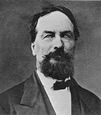 ordered young Black Hawk to lead a serial killer by the name of Bill Hickman and his men up Rock Canyon to pursue the survivors. In freezing temperatures and deep snow, Black Hawk, having no choice in the matter, did as he was ordered and led the men up Rock Canyon. Lookouts scaled the steep walls of the canyon as Wells and his men slowly made their way up the rugged canyon . Black Hawk reluctantly followed behind.
When they reached the camp of the survivors, terrified women and children were scattering about. Black Hawk was ordered to look in side the teepees. There Black Hawk saw his beloved relative Moonch (Old Elk) frozen to death, and many others who had died of their wounds lay frozen stiff in the cold.
The Mormon vigilantes greedily helped themselves taking the belongings from the dead, while Bill Hickman, with knife in hand, hacked Old Elk's head off his frozen body. He said Jim Bridger had offered him a hundred dollars for the head. Old Elk's wife refused to be taken captive . She broke free and ran for her life. She scaled the steep cliffs, but while doing so, she either jumped or slipped and fell to her death. Hence the Mormon s disrespectfully dubbed the canyon Squaw Peak which is located above the Provo LDS Temple . It is a name that endures to this day.
Of the seventy or so warriors, only about thirteen had escaped while only one life was lost among the Mormons. One of the warriors who managed to survive was taken captive. This was An-kar-tewets, the same one to which the Church leaders Dimmick and the Higbee brothers had earlier sworn an oath that no harm would come to the Timpanogos, that their land and rights would not be taken away, and that they would be given many gifts.
Table Point Massacre More Timpanogos Beheaded
Earlier, the U.S. government had sent Army Corps of Topographical Engineers Howard Stansbury to the Utah Territory to survey and map the Great Salt Lake. Stansbury wrote in his journal that the expedition was briefly interrupted by the battle at Fort Utah. He volunteered to assist Brigham Young's militia and sent his company to help out.
Meanwhile, Wild Bill Hickman and his men returned from Rock Cayon to Fort Utah, where Hickman showed off his trophy, the head of Old Elk. Bill Hickman then hung the head of Old Elk from the eves of his cabin at Fort Utah. A witness at Fort Utah told reporters, "...it was hung pendant by its long hair from the willows of the roof of one of the houses. I well remember how horrible was the sight." - Robert Carter, Fort Utah.
Dr. James Blake, a geologist in the Stansbury Company, was greatly influenced by Hickman's trophy of Old Elk's head. Dr. Blake then ordered troops Abner Blackburn and James Orr to go out and behead each of the frozen corpses lying about in the snow following the two-day battle that resulted in the deaths of nearly a hundred "Indian" people.
On February 16th, at Table Point near the southeastern shore of Utah Lake, Blake led one of the smaller hunting parties to capture a band of some 50 Timpanogos. Lieutenant Gunnison of the Stansbury Expedition reported that the Mormons promised to be friendly to the Timpanogos men, but then Blake disarmed the men, lined them up, and executed them in front of their families. He wanted to sell their heads for money. Some attempted to flee across the frozen lake, but the Mormon militia ran after them on horseback and shot them. The men hacked off the heads of as many as fifty corpses.
In total, one militia man and an estimated 102 Timpanogos were killed" at Fort Utah and Table Point. ~Source Wells's Special Order No. 2, Utah State Archives, State Capitol, Salt Lake City, Utah Territorial Militia Correspondence, 1849-1863, ST-27, Microfilm reel 1, Document No. 5. Eugene E. Campbell. Establishing Zion, Utah Humanities.org~
"Here," wrote one historian, "the violence shifted from warfare to killing." After disarming a large band of Timpanogos at *Table Point near the southern edge of Utah Lake, the militiamen shot them down in cold blood. But it was the brutal and senseless act that followed the slaughter that is as chilling. As for the Timpanogos massacred at Table Point, both Abner Blackburn and Anna Clark Hale substantiated the fact that the 'Indians' bodies had been mutilated and their heads brought back to Fort Utah. "I can never forget," Hale remembered, "the horrible and frightening scene when the boys brought into the Fort a number of Indian heads with their nasty bloody necks and their tongues sticking out of their mouths. It was awful."
Because there was a market for human body parts, Dr. Blake told the men he "wanted to have the heads shipped to Washington to a medical institution." They piled them in open boxes, along with a dozen or so Mallard ducks that Blake had shot while his men performed their chores. The heads and ducks were taken to the fort by Dr Blake's troops and placed in sight of the young boy Black Hawk and his traumatized kin. Innocent of any wrongdoing, Black Hawk looked at the grizzly remains of people he knew, placed before him for two long and excruciating weeks. Keeping the agreement, Abner delivered the rotting heads and ducks to Blake in Salt Lake. Dr. Blake settled up and invited Abner to dinner. Abner Blackburn declined, saying he had lost his appetite.
April of 1851, the fort was dismantled and moved. The fort, according to historian Robert Carter author Founding Fort Utah, origanlly stood near the corner of 1200 North and 500 West in Provo. It was then moved to what is now Sowiette Park at 400 North and 500 West.
In September, 1850, Brigham Young appoints himself as Superintendent of Indian Affairs for Utah Territory.
*Note: Table Point is known today as Lincoln Point and Lincoln Beach. It is located on the east side of east side 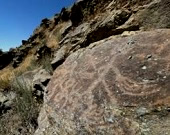 where the mountain comes to a point on the edge of Utah Lake. Recently, Phillip led a team of experts, historian Dr. John Perry Christensen, PhD, and documentary filmmaker David White to res each the area for any clues that would indicate the Timpanogos occupied the lake. Higher up on the side of the mountain they found a petroglyph proof that the area was once occupied by the Timpanogos.
Next: Richville Raided 1851
 Order now,