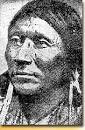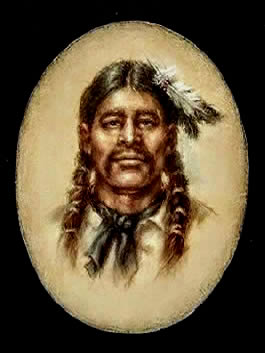
Timpanogos Chief Antoga Black Hawk 1835-1870
The Utah Black Hawk War
Extermination of the Timpanogos
Nation
By Phillip B Gottfredson

The definitive cause of the Utah Black Hawk War began in 1849, when Mormon leader Brigham Young ordered the "extermination" of the Timpanogos Nation. Over the next 23 years, this triggered more than 150 violent confrontations and a series of traumatizing massacres. During this period, the Timpanogos, who Dominguez and Escalante described as a peaceful Shoshonee Nation, faced widespread starvation, a devastating smallpox epidemic, forced removal from their homeland, boarding schools with graveyards, and assimilation into Euro-Christianity. These events reduced their thriving population, estemated in the tens of thousands, by 90% while inflicting irreversible damage on their culture. By 1865, only two of the original seven Chiefs remained in leadership: Antonga Black Hawk, who became the war Chief of the Timpanogos, and the principal Chief, Tabby. See Battle Creek Canyon &
Fort Utah Massacres 1849 to 1850
Was it Black Hawk's War? Not according to Phillip B Gottfredson, historian for the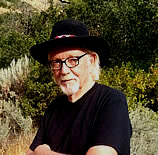 Timpanogos Nation. "Why does the conventional history begin in 1865?" I can sum it up in one word: ERASURE, said Gottfredson. This framing obscures the preceding 16 years that I call 'Brigham Young's Black Hawk War' that began in 1849 when he ordered his militia to exterminate the Timpanogos. See The Black Hawk War Timeline
Black Hawk did not become a Timpanogos war chief until 1865. He had served in that role for only 14 months when he was mortally wounded by a gunshot to the stomach at Gravelly Ford on June 10, 1866. He spent the remaining years of his life seeking peace before dying in 1870 from complications of his wound. To call it "Black Hawk's War" is a great injustice to Black Hawk and the Timpanogos Nation.
The Timpanogos preferred peace over bloodshed, but they were fully capable of defending their families and ancestral homelands when threatened. Their resistance must be understood in the context of the violence and dispossession they experienced, not as proof that warfare defined their people. The Timpanogos were defending their right to live on their ancestral homelands, as their people had since time immemorial, long before Brigham Young and his followers arrived in Utah Territory in 1847.. See The Battle At Gravelly Ford, Utah 1866
Apostle George A. Smith ordered the church's private militia, the Nauvoo Legion, to forcibly remove Native peoples from their ancestral homes, declaring the people held "no rights to their land." On that basis, and within that same pivotal year of 1850, Brigham Young gave the order:
"I say go [and] kill them…Tell Dimick Huntington to go and kill them—also Barney Ward—let the women and children live if they behave themselves…We have no peace until the men [are] killed off—never treat the Indian as your equal." — Brigham Young (Source: Brigham Young Collection, Microfilm reel 80, box 47, folder 6) See Brigham Youngs' extermination order.
Young spent over one million dollars in church funds—the equivalent of $35 million today—to carry out these military campaigns, which he later billed the United States Congress for reimbursement. See MEMORIAL
OF THE
LEGISLATIVE ASSEMBLY OF UTAH TERRITORY
The Mormons' Black Hawk War in Utah was a disgraceful affair. To this day, the Church of Jesus Christ of Latter-day Saints has responed to repeated requests to rescind Brigham Young's "Extermination Order No. 2" on the Timpanogos Nation. The apparent hypocrisy, such as Mormons giving Tribal Nations a book that says, 'Thou shalt not steal,' serves to remind us of the manipulation, dehumanization, and subjugation of the tribal nations of Utah while appearing to serve a benevolent cause. See We Can Forgive, But Never Forget.
 Professor Dr. Daniel McCool of the University of Utah provides a succinct summary of the Black Hawk War: "We took from them almost all their land—the reservations are just a tiny remnant of traditional tribal homelands. We tried to take from them their hunting rights, their fishing rights, the timber on their land. We tried to take from them their water rights. We tried to take from them their culture, their religion, their identity, and perhaps most importantly, we tried to take from them their freedom." See Timpanogos Nation Biography & The Utah Black Hawk War
The history of the Timpanogos is part of a much larger story—one that raises fundamental questions about how societies understand their relationship with other peoples and the natural world.
"Western society has historically adopted the belief that humans possess the right to dominate plants, animals, and even other humans. This materialist perspective has contributed to economic, ecological, social, and moral crises, leading to the decline of various cultures." -Carlos Barrios, Mayan Elders Council.
Snake-Shoshone Timpanogos Chief 'Wakra' in a official Statement to Indian Agent M. S. MARTENAS July 6, 1853, said "They were friendly for a short time until they became strong in  numbers, then their conduct and treatment towards the Indians changed—they were not only treated unkindly—they have been treated with much severity—they have been driven by this population from place to place—settlements have been made on all their hunting grounds in the valleys, and the graves of their fathers have been torn up by the whites...," See Timpanogos Chief Wakara
Steven T. Newcomb, Professor Indigenous Law Institute and author of Pagans in the Promised Land, wrote: "Indian nations have been denied their most basic rights... simply because, at the time of Christendom's arrival in the Americas, they didn't believe in the God of the Bible, and did not believe that Jesus Christ was the true Messiah... This is the land promised by the Eternal Father to the Faithful, since we are commanded by God in the Holy Scriptures to take it from them, being idolaters, by reason of their idolatry and sin, to put them all to the knife, leaving no living thing save maidens and children, their cities robbed and sacked, their walls and houses leveled to the earth. This is the basis for the denial of Indian rights in federal Indian law and remains as true today as it was in 1823." See The Doctrine of Discovery
According to Peter Gottfredson’s firsthand account, 1919, Indian Depredations In Utah. The late historian Will Bageley wrote, "Peter Gottfredson spent the next 20 years compiling a unique history of some of the darkest episodes in our past, Indian Depredations in Utah. Brigham Young preached it was “cheaper to feed them than to fight them,” but he spent millions in church funds waging a virtually secret war that only ended when U.S. troops intervened in 1872. The war created a vortex of fear and hatred that led to greater violence and brutality on both sides. A product of its time, Indian Depredations is bitterly racist: the Utes and Paiutes are “skulking savages,” “murderous marauders,” “Mr. Redskin” and “the sleepless foe.” But the book reports any number of white depredations that would otherwise be unknown, and like the Iliad, the losers are often more courageous and noble than the victors." See Peter Gottfredson Indian Depredations in Utah
The Timpanogos Nation: Uintah Valley Reservation
I care very deeply about the Timpanogos Nation. I want to Quote from the book Black  Hawk's Mission of Peace, one of many heart-to-heart conversations I had with Perry Murdock, a Council member of the Timpanogos Nation and a direct descendant of Black Hawk's uncle, Chief Wakara, Perry described the severity of the trauma his ancestors experienced.
"Every day, we are reminded of what our ancestors went through. Our families were torn apart. Children murdered, the old, the women, all those who were brutally murdered and made to suffer and die from violence, then disease, then starvation, our ancestors' graves torn up, the land destroyed, it was genocide plain and simple. Why? What did we do? We didn't do anything. We were living in peace. We were happy. Our children were happy. We loved each other. We cared for each other. And when the Mormons came, we tried to help them. Then they tried to take everything away from us. They wanted it all. They wanted to exterminate us, wipe us off the face of the earth. Why? For our land? For our oil? Now we have nothing. Perry also noted, ... the Mormons got involved and lied to the Utes about us, and they lied to us about the Utes. They made us so we didn't trust each other and we began to fight each other. They didn't care about us, all they wanted us to do was fight each other, tear us apart, take our land..."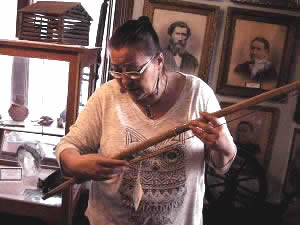
Mary Murdock Meyer, Perry's sibling, and a direct descendant of Chief Arapeen, a brother of Wakara, wrote, "As Chief Executive of the Timpanogos Nation, I speak for the people when I ask why? We fed you when you were hungry. We helped you when you did not understand our lands. Why then were we forgotten?" Visit the Timpanogos Website
Tribal Identity in the Utah Black Hawk War
People and institutions are saying that Black Hawk was a Ute Chief. I spent 4 years with the Utes and their leaders who taught me that they came from Colorado and their chiefs were Ignacio, Colorow, and Ouray. They denied having any connection to the Timpanogos chiefs Walker, Arapeen, and Black Hawk, who they reffered to as "renegade Indians."
The identity of the Timpanogos should be based on historical records, not assumptions or repeated claims. Ute members, state historians, and LDS historians have said that the Timpanogos are Ute, yet clear and reliable historical documents supporting that claim cannot be found. In contrast, the Timpanogos have thousands of pages of records identifying them as a Band of the Snake Shoshone.
After more than two decades of studying both sides of this history, including eight years living with the Timpanogos and personally reviewing their historical documentation, I have examined the evidence firsthand and stand firmly with them. When I asked the Timpanogos which other historians had actually spoken with them about their history and identity, they told me: none. This raises an important question: how can historians reach definitive conclusions about the identity of a people without consulting the people themselves?
The records also show a long history of government reclassification and the erasure of Timpanogos identity, raising an even more fundamental question: By what legal authority were the Timpanogos’ identity and rights set aside? See The Timpanogos Are Not Ute!
Indigenous Worldviews
When Euro-colonialism first came to the Americas, Indigenous peoples, who were deeply spiritual, were not familiar with the Christian concept of God and Satan.
John C. Cremony was a Spanish interpreter for the U.S.–Mexico Boundary Commission in the 1850s. Cremony spoke fluent Apache, and authored the book "Life Among The Apaches." He famously wrote, “Will civilized people never learn that they are quite as obtuse to comprehend real Indian nature as the Indians to understand their civilization? Can they not see that their hauteur, self-sufficiency and overbearing conceit, are quite as reprehensible as the Indian's ignorance, distrust and superstition?"
When Brigham Young and his folowers arrived in 1847, I remember being told in school and church that the region was an "an empty desert wilderness" waiting to be settled by latter day saints "who made it bloosome like a rose."
The Timpanogos of the Wasatch lived on the shores Timpanogos Lake, just as their ancestors had for thousands of years. Towering above 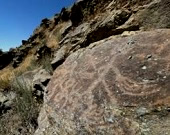 them stood La Sierra Blanca de Los
 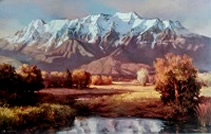 Timpanogos, a 13,000-foot mountain named for their people by early Spanish explorers Dominguez and Escalante in 1776. Beneath a blue sky, the Timpanogos people stood in awe of the beauty around them, bright white clouds ever-so gently brushing against the rugged, majestic peaks. The valley was nourished by abundant, crystal-clear water flowing freely through meandering rivers, springs, and lakes that supported countless forms of life. The valley was whole and complete: from its nutrient-rich soil vibrant with life, deer, elk, those that swim, fly, creep and crawl, everything flourished in perfect harmony. The journals of their ancestors told their stories indelibly written in the varnish of ancient rocks, cave walls, and canyon cliffs. This was the cherished homeland of the Timpanogos.
The greatest of all losses 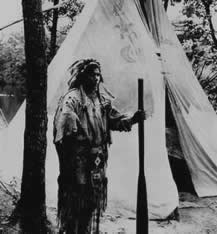 in the Utah Black Hawk War was, in my opinion, the Timpanogos people, whose ancient culture reflected a deep understanding of what it means to be human living in cohabitation with the natural world as stewards of Mother Earth. For thousands of years, Indigenous worldviews were that survival and prosperity depend on reciprocity, living in harmony with all inhabitants of Mother Earth the source of all who have the breath of life within. In return the land produced an abundance of food and resources necessary to sustain a thriving population.
Native people did not understand greed until the white man came—it was hard to understand why a person wants more than they need.
Lacee Allan Harris, a Ute, earned an MSW from UofU and served 30 years as an LCSW (licensed clinical worker) and mental health therapist at the Indian Walkin Center in Salt Lake City. In a powerful 2005 interview, he explained the concept of the four sacred colors to me: there are four groups of people: red, yellow, black, and white. Alone, each is fragile; together, they are stronger. Each is given a gift: fire, earth, wind, or water. Natives: earth, whites: fire, blacks: water, and yellow: air.
Lacee A. Harris also shared an Indian prophecy: the four groups must unite to restore balance before there can be peace, or face consequences. Reflecting on the humanity of Native peoples and the humanity of Black Hawk suffering at a tender age, seeing the killing and beheadings of his people; if we remember, we are all family. Seeing each other as relatives makes forgiveness possible, despite past horrors. If we come together, pain and conflict become easier to bear. Everyone needs healing, not just Native people, but the soldiers and their descendants. Alone, we break easily, but united, we can heal and wipe away all our tears. See It's Not About Me
The Utah Black Hawk War
Beginning in 1846, at the rate of some three thousand a month, new Mormon arrivals sprawled out into the ancestral home of the Timpanogos Nation, disrupting the natural order 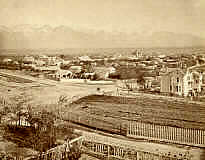 of all living things including Indigenous civilizations. They killed deer, elk, and buffalo and depleted the fish population in the Timpanogos River (known as the Provo River) and Timpanogos Lake (known as Utah Lake). They diverted and polluted water sources, the environment that First Nations solely depended upon for food, medicines, and life-sustaining necessities. With the rapid increase in the Mormon population, agricultural development, and barbed wire, the Timpanogos soon ran out of territory for a sanctuary vital to their culture, a gross injustice that cannot be overlooked.
*The following are eleven massacres of more than 150 encounters that were extremely damaging and traumatizing for the Timpanogos during the years of the Black Hawk War, 1849 to 1873. See The Black Hawk War Timeline for a complete list of events and related material.
The Battle Creek Canyon Massacre - Pleasant Grove, Utah
The Battle Creek Massacre in the winter of 1848-49 was a prelude to the Black Hawk War. Brigham Young falsely accused a small group of the Timpanogos Nation of stealing his horses. This led to the tragic deaths of three innocent individuals and the capture of a vulnerable young boy named Nu'intz, whom Brigham Young would later call Black Hawk. See The Battle Creek Massacre
The Murder of Old Bishop
Brutality in Utah's Native American history are numerous; the murder of a Timpamogos elderly man, the Mormons called Old Bishop, occurred on the 1st of August, 1849, at Fort Utah in Provo. Accused of stealing a shirt from a clothesline, he was murdered in cold blood, disemboweled, his stomach filled with rocks, and thrown in the Provo River. See The Murder of Old Bishop
Fort Utah Massacre
January 1850, Brigham Young orders the extermination the Timpanogos. The Mormon vigilantes helped themselves taking the belongings from the dead, while Bill Hickman, with knife in hand, hacked Old Elk's head off his frozen body. He said Jim Bridger had offered him a hundred dollars for the head. Old Elk's wife refused to be taken captive. See Fort Utah; Building the Fort
Massacre at Table Point
January 1850, “The violence shifted from warfare to killing.” After disarming a large band of Timpanogos at Table Point near the southern edge of Utah Lake, the militiamen shot them down in cold blood... then decapitated..." See Fort Utah; Table Point
Mountain Meadows Massacre
In the Mountain Meadows Massacre, 1857, Major John D. Lee of the Nauvoo Legion led a ragtag band of Latter-day Saints disguised as "Indians" in an assault on a wagon train from Arkansas, murdering 120 men, women, and children. The LDS Church unfairly blamed the Paiute. In 2007, the Church of Jesus Christ of Latter-day Saints, after decades of denial, finally confessed to the Mountain Meadows Massacre. In 1960, the late Church president David O. Mckay said, "By their fruits ye shall know them." See Mountain Meadows Massacre
The Bear River Massacre
In the Bear River Massacre of 1863, over 493 shoshonee were slaughtered, led by the unashamed Colonel Patrick Edward Connor. Brigham young supplied Connor with troops and equipment. See Bear River Massacre
The Grass Valley Massacre
Timpanogos's account of the Grass Valley Massacre 1865 is that when the soldiers first approached their camp, the old Chief showed a soldier a paper from the Bishop of Glenwood that said they were friendly and no harm would come to them. He was the first one shot, and the soldier who shot him then beheaded him with his sword. See Grass Valley Massacre
The Circleville Massacre
Then at the peak of the Black Hawk War in 1866, Bishop William Jackson Allred led the Circleville Massacre of the Koosharem Paiutes. Twenty-six men, women, and children's throats were slit and buried in a mass grave. See Circleville Massacre
The Gravelly Ford Battle
June 10, 1866, Black Hawk was shot in the gut by James E. Snow at the Gravelly Ford Battle while trying to rescue a fallen warrior, Whitehorse. See Black Hawk Wounded at Gravelly Ford
Chief Sanpitch Murdered
In June 18, 1866, Black Hawk's father Sanpitch, had been held captive for 6 months while his captors were hoping to force Black Hawk into submission. Sanpitch recieved word his son had been shot managed to escape briefly and Dolf Bennett slit his throat. See Timpanogos Chief Sanpitch Murdered, 1866
The Old Peace Treaty Tree in Ephram, Utah
1866, one of Black Hawk's few Mormon friends, Canute Peterson of Ephraim, paid a visit to the ailing leader in Cedar City—taking sugar, hams, bread, beads, molasses, tea, coffee, tobacco, flour, medicines, and clothing. Black Hawk promised Canute unconditional friendship for his kindness. See The Old Peacetreaty Tree
Congress Never Ratified A Single Treaty In Utah
The late University of Utah historian Floyd O'Neil describes, "There were no treaties made between the Indian people of Utah and the Church of Jesus Christ of Latter-day Saints. Only 'agreements' were made. At best, these agreements were divisive, designed to trick the Indians into giving up their land. They were not legally binding."
Despite popular belief that the Spanish Fork Treaty of 1865 brought an end to the war, the fact is that it was never ratified by Congress. However, Congress expressed a preference, "We would rather the Indians to have the land than the Mormons. The treaty identifies who the Indians of Utah are. "See The Black Hawk War Treaties
Settler Colonialism and Systemic Erasure
Cornell Law School defines settler colonialism as "a system of oppression based on genocide and colonialism creates a system of domination built on supremacy and taking land by force.
Settler Colonialism, was the culture of Mormon colonialists, who mocked Indigenous life-ways. They were driven by greed, they wanted everything. Then came forced removal, boarding schools, thievery, and church-led massacres-history that comes straight out of the victors' own historical records.
The Treaty of Guadalupe Hidalgo and the Violation of Timpanogos Sovereignty
When Mormon colonists arrived in the Great Basin, it was still Mexican territory. They met the Shoshone Timpanogos people, who helped them get through their first winter. For thousands of years, Indigenous worldviews taught that survival and prosperity depended on helping and caring for one another. However, this important fact is missing from the Black Hawk War Narritive today. Mormon settlers unfairly judged the Timpanogos as "savages and hethans."
In February 1848, the Mexican-American War ended with the Treaty of Guadalupe Hidalgo. However, before the federal government could formally organize the region, Church President Brigham Young took independent action in 1849. He established the provisional "State of Deseret" and appointed himself as governor, assuming executive, theological, and military control over the region.
By the time Congress created the Utah Territory in 1850, President Millard Fillmore signed the official gubernatorial appointment not to initiate Young's rule, but to confirm the reality already on the ground. This effectively placated the settlers and avoided a local revolt against federal oversight.
The Treaty of Guadalupe Hidalgo had immense legal significance for the region's Indigenous inhabitants: it explicitly preserved their preexisting land rights. As documented by the Constitutional Rights Foundation, Mexican negotiators secured binding promises from the United States ensuring Indian land rights would remain inviolate, exactly as recognized under Mexican law. Article VI of the United States Constitution clearly states that international treaties are the supreme law of the land. In spite of these supreme federal protections, the newly formalized territorial leadership later chose to circumvent international law.
The State of Utah Has authority over lands owned or held by any Indian tribes.
Driven by Manifest Destiny and a theological concept of 'Righteous Dominion,' LDS leadership denied Native sovereignty. As a result, Governor Brigham Young used his self-confirmed territorial authority to bypass international law and target the Timpanogos Nation.
This violent local campaign directly contradicted federal law. Decades later, 1896, when Utah petitioned for statehood, the federal government forced a confession of this legal reality into the state's founding documents. Under Article III of the Utah State Constitution, the state permanently and irrevocably disclaimed all right, title, and authority over lands owned or held by any Indian tribes. This disclaimer shows that the state had to concede what Brigham Young tried to erase: that the Timpanogos Nation had sovereign, preexisting land rights beyond Utah's legal jurisdiction. See Blood on the Desert: The Timpanogos Genocide
Timpanogos Chief's Grave is Robbed For Amusement
In-spite the numerous attempts by Timpanogos leaders to live in peace, Mormon settlers treated them with much severity; one of the most notable examples is the robbery of Chief Black Hawk's grave in 1919. On September 26, 1870, his loving kin honorably laid him to rest on a hillside 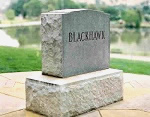
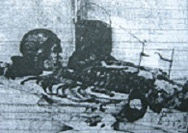 overlooking Spring Lake, the place of his birth—just 49 years passed when Mormons dug up his mortal remains and then exhibited them in the window of a hardware store in Spanish Fork, Utah, and then on Temple Square in downtown Salt Lake City for some sixty years to entertain visitors. This is the culture of settler colonialism. See Chief Black Hawk's Grave Robbed For Amusement
Black Hawk was not a savage; he stood for unity, cultural heritage, sovereignty, and environmental stewardship. Digging up his remains for entertainment is violent dehumanization, not just disrespect. Turning a person who sought peace in his final hours into an object displayed in a store window strips away his humanity in death as it was in life.
The Black Hawk War Is Replete With Religious Contradictions
While Timpanogos families were admonished by Brigham Young to follow Jesus, plant seeds and grow crops, and live as the Mormons do, they were also told 'Thou shalt not steal,' as the settler-colonial state committed deeper theft—not just of land and its resources but of dignity, sacredness, and personhood. By displaying Black Hawk’s remains for public entertainment, settlers did more than take land. They denied an Indigenous leader the right to exist, even in death. See Russell Means "For America to Live, Europe Must Die"
"Until the lion tells its story, the hunt will always glorify the hunter." This proverb introduces an essential question: who is more qualified to tell the story of Mormon colonialism in Utah than its victims? In 2015, Mary Murdock Meyer, Chief Executive of the Timpanogos Nation, initiated a collaboration with Phillip Gottfredson to accurately document and share the Timpanogos Nation's version and personal account of settler colonialism. Their partnership aimed to ensure the Timpanogos experiences and perspectives were faithfully represented.
Phillip emphasizes, "The Timpanogos perspective is not a mere footnote in the Black Hawk War narrative; it's a pivotal account that offers a firsthand view of what Mormon colonialism looks like." Together, Mary and Phillip embarked on the ground breaking book My Journey to Understand Black Hawk's Mission of Peace. This historical milestone unveils the Timpanogos account of the War for the first time, thereby giving a much-needed voice to the Timpanogos and enriching our understanding of their history.
The Logic of Settler Colonialism
Tribal identity in the United States has been systematically undermined through federal policies such as the Indian Boarding School system and the The Dawes Act, 1887. authorized the President to divide reservation land, previously held communally by tribal members, into individual allotments. The Indian Reorganization Act (IRA) of 1934 marked a significant shift by ending the allotment period, protecting remaining Indigenous lands, and granting tribal nations the authority to self-govern. However, the IRA required Indigenous tribes to conform to a standardized governmental structure imposed by the Bureau of Indian Affairs (BIA), replacing traditional councils and leadership with a majority-rule voting system. BIA authority, funding, and services are limited to federally recognized tribes, which has contributed to the erasure of groups such as the Timpanogos from the historical record. See CONGRESSIONAL ACTS to understand how our government has mistreated Native Americans by creating convoluted laws to subjugate and have dominion over a people who are Indigenous to America.
Mary Meyer notes that Timpanogos children are taught histories that do not align with their own understanding. This situation does not foster genuine education, but presents difficult choices. These students are taught to accept the claim that the Timpanogos are Ute or else it may challenge their academic success. Mary's expectation is an end to discrimination. See Utah Schools Ignore True Indian History
When the Civil War ended in 1865, the United States government called for exterminating tribes who resisted giving up their land, and the Government turned its attention toward Western expansion and the U.S. military to 'Indian' fighting.
Forced Assimilation
Highly publicized massacres of 'Indians' brought the attention of philanthropic groups. American humanitarians proposed a new solution to the 'Indian problem' by eliminating 'Indianness' through acculturation. Christian reformers argued that 'if Indians were assimilated, the Indian problem would vanish.'
The Rocky Mountain News paper quoted Brigham Young saying, "If you want to get rid of the Indians try and civilize them."
In the 1860s, the U.S. adopted a Peace Policy, gradually shifting toward a more peaceful approach, and genocide of Native Americans was officially discouraged. The Peace Policy meant making them wards of the government, forcing Native tribes to reservations and boarding schools to assimilate them into Euro-settler culture, thus eliminating Native peoples bloodlessly. The intended effect of the Peace Policy was to prevent the rampant slaughter of Native Americans. See Bording Schools
Christianization, comercialization, and civilization, became the means to 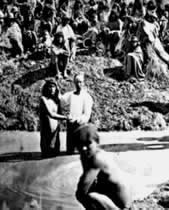 assimilate tribal peoples so that they could be integrated and absorbed by mainstream society. Example, the LDS church converted many of Utah's Native Americans to Mormonism, according to church doctrine, and in so doing, the so-called "loathsome" Indians would become a "white and delightsome people." They would be forgiven of the sins of their forefathers. (Book of Mormon 2 Nephi 5:21-23) According to church doctrine, the nature of the dark skin was a curse, and the cause was the Lord; the reason that the Lamanites (Indians) "had hardened their hearts against him, (God)," and the punishment was to make them "loathsome" unto God's people who had white skins. See Only In The Land Of The Lamanites.
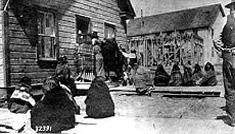 Suppose you were Indigenous person and lucky enough to survive settler colonialism. In that case, you are confined to a reservation and made to depend on government-run Indian agencies for scarce and sometimes contaminated commodities to survive. Your children are taken away and sent to boarding house schools with graveyards, all under the slogan "Kill the Indian, and save the man." Watch our heartbreaking video on boarding schools.
The Denver Rocky Mountain newspaper quoted Brigham Young saying, "You can get rid of more Indians with a sack of flour than a keg of powder." Clearly his intention was to "get rid" of the indigenous population. Mormon colonialism had less to do with saving the "heathens" from hell, and more to do with getting rich. Brigham Young famously said, "It is cheaper to feed them than fight them" then proudly boasts at the end of the conflict, "I don't think there is one out of ten, and perhaps not even one out of a hundred, who were here when we arrived." This statement implies that the Timpanogos suffered a staggering death toll—actions that LDS scholars agree resulted in a 90% reduction in Utah's Timpanogos population.
Summary
As We reflect on the irreversible harm inflicted upon the lives and spirits of the Indigenous peoples over the past 150 years, it is equally significant to consider the descendants of those who perpetrated these acts. They also require healing. See The Silent Victims of the Utah Black Hawk War.
Settler Colonialism, was the culture of Mormon colonialists, who mocked Indigenous life-ways. They were driven by greed, they wanted everything. Then came forced removal, boarding schools, thievery, and church-led massacres-history that comes straight out of the victors' own historical records.
Twenty years of intensive research conducted by Phillip B Gottfredson, in collaboration with Native American scholars and historians, estimates that around 70,000 Indigenous people inhabited the Great Basin when the Latter-day Saints arrived.
At the Black Hawk War Veterans first reunion at the Reynolds Hall in Springville, Utah, 1894 John Lowry spoke these chilling words, "In those early days it was at times imperative that harsh measures should be used. We had to do these things, or be run over by them. It was a question of supremacy between the white man and the Indian." See Black Hawk War Facts; John Lowry
It's Time To Look Beyond Religion For Answers
It's time to look beyond "Faith Promoting History" and find a common ground where healing can begin for the sake of humanity. Where we can acknowledge that the Timpanogos, and all Indigenous peoples are a sovereign people. Our expectation to return to the practice of equality, reciprocity, understanding our relationship to Creator and Mother Earth.
We 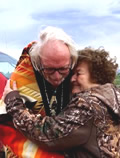 can learn much from First Nations people if we get out of our heads and listen with our hearts. As Lacee Harris said, We should help each other because we are all interconnected and interdependent upon one another. We need each other to survive and live. We need each other as equals. We are all in a relationship with each other. And each becomes a relative by relationship. Helping each other learn the truth makes it easier to heal from the injustices. Our expectation should be to find a pathway to forgiveness and help build that bridge between our cultures with compassion, honesty, and mutual respect for humanity. See We Can Forgive—But Never Forget The Black Hawk War.
One of the most compelling take-a ways of Phillip's 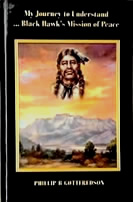 book My Journey to Understand Black Hawk's Mission of Peace is his detailed description living with Indigenous people learning their deep, sacred connection to each other and Mother Earth.
"Native American culture is a perfect example of total spirituality without religion." Elders of the shoshonee and other Tribes, invited me to participate in numerous ceremonies. It was life-changing. The spiritual experiences I had humbled me, and profoundly changed my understanding of what it means to be human, and opened my eyes to the sacred connection we have with all living things. Understanding Native American time-honored traditions is essential when establishing meaningful relations with them, especially for educators with Indigenous students. See Phillip B Gottfredson Biography
Honesty, love, respect, courage, truth, wisdom, and humility, are ancient traditional virtues and values that Black Hawk and Indigenous people have honored throughout their history. Sadly, scholars ignore that the age-old message of Indigenous America is about 'connection, relationship, and unity.' All people are one. All are the direct living descendants of our Creator. Lakota Chief Joseph said, 'We have no qualms about color. It doesn't mean anything."
Phillip B Gottfredson Author/Historian
How do I know these things? I lived with them for over 25 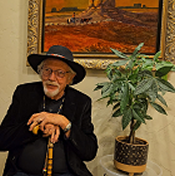 years; I found the truth I was looking for in the worldviews of the Timpanogos and tribal nations throughout North America and the Mayans in South America; I learned what true freedom looks like. I found my true self. I learned how to walk my path in a good way, with purpose, and for the good of all. I learned to love myself and others. I am proud to say I voluntarily and willingly assimilated into Native American culture without shame or regrets. No, I don't pretend to be Native American, a wannabe. I wannabe free, yes! I'm just not as white as I look. It has been the best years of my life. But it's not about me, it's not about you. It's about all of us, the human race, the circle of life. I'm only the messenger. -Phillip Gottfredson. ~ See It's Not About Me
Phillip's great-grandfather Peter Gottfredson, was an inmigrant from Denmark, friends with the Timpanogos during the 1860s, who called Peter “the sheep captain.” Being about the same age, he formed a close friendship with Black Hawk. Phillip followed in Peter's footsteps and lived with the Timpanogos and numerous Indigenous Tribes for more than two decades. See Peter Gottfredson's Biography
"I see a time of seven generations when all the colors of mankind will gather under the sacred tree of life, and the whole earth will become one circle again." -Chief Crazy Horse, Oglala Lakota.


 Order now,